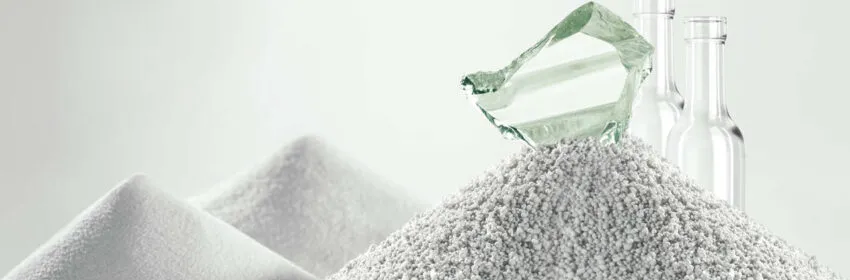
Glass powder — also called powdered glass or powder glass — is one of the most useful recycled materials in the United States today. It helps build stronger roads, better concrete, and beautiful ceramics — all from waste glass that would otherwise fill a landfill.
In this guide, you will learn exactly what glass powder is, how it is made, where it is used across US industries, and why it is growing fast as a sustainable material in 2026.
| $2.4B US Market Size (2025) Growing to $4.1B by 2032 | Up to 30% Cement Replacement In concrete mix — ASTM tested | 200M+ Landfill Reduction Tonnes of glass waste saved yearly |
What Is Glass Powder?
Glass powder is finely ground glass. Also known as powdered glass or powder glass, it is made by crushing and milling waste glass — like old bottles, windows, and factory scraps — into tiny particles. These particles can be as small as 10 microns, which is thinner than a human hair.
The main ingredient in glass is silica (SiO₂). Silica is a strong, hard mineral found in sand. Because glass powder is mostly silica, it works well as a replacement for cement, a filler in paints, and an ingredient in ceramics.
Simple definition: Glass powder = finely ground recycled glass. It looks like flour, feels like fine sand, and works as a building, craft, and industrial material.
There are different sizes of glass powder:
- Coarse powder (75–300 microns) — used in abrasive blasting and surface prep
- Medium powder (25–75 microns) — used in concrete and coatings
- Fine powder (under 25 microns) — used in ceramics, cosmetics, and specialty coatings
How Is Glass Powder Made?
Making glass powder is a simple four-step process:
- Collect — Waste glass is gathered from bottles, windows, and manufacturing scraps.
- Clean & sort — Glass is washed and sorted by color and type.
- Crush — A crusher breaks the glass into small chunks called cullet.
- Mill — A ball mill or hammer mill grinds the cullet into fine powder. Particle size is controlled by how long the glass is milled.
The finer the powder, the stronger its effects in concrete and ceramics. Glass ground below 75 microns works as a pozzolan — a material that reacts with cement to create extra strength.
8 Key Uses of Glass Powder in the USA
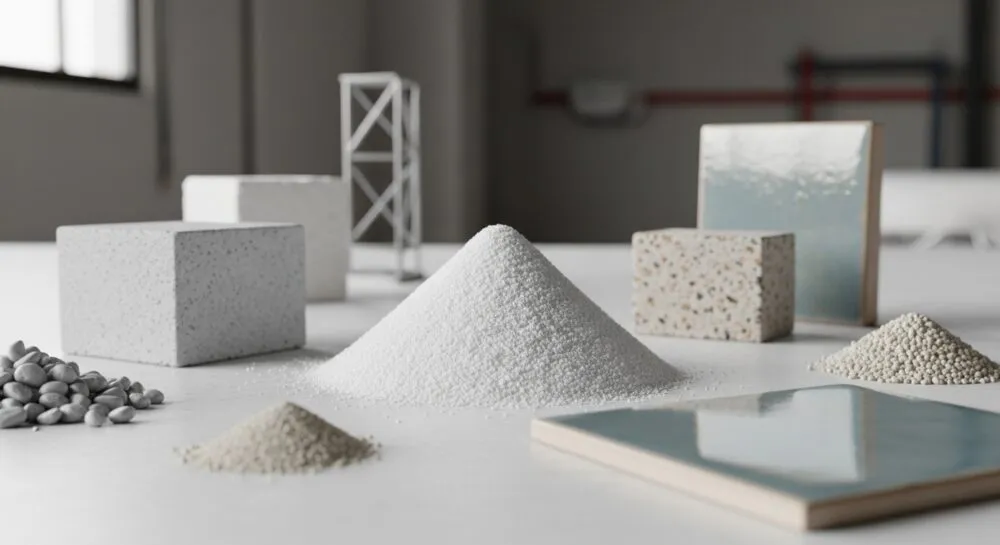
Glass powder is used in many US industries. Here are the eight most important uses:
1. Concrete & Construction (Biggest US Use)
Glass powder is used as a Supplementary Cementitious Material (SCM) in concrete. It partly replaces Portland cement in the mix.
US research shows that replacing 20–30% of cement with glass powder can increase concrete strength, lower porosity, and block water and chloride from getting inside slabs.
- Stronger and longer-lasting concrete slabs
- Less cement used per pour — saves money and cuts CO₂
- Better resistance to water and salt damage (important for US coastal and northern road projects)
- Approved for use under ASTM C1866 — the US standard for ground glass pozzolan
2. Ceramic & Tile Manufacturing
In the US ceramics industry, glass powder is used as a flux material. A flux lowers the melting point of a mix. This means kilns can run at lower temperatures — saving energy and reducing costs.
- Creates smoother, shinier ceramic surfaces
- Improves the strength of tiles and sanitaryware
- Used by US studio potters and large tile manufacturers alike
3. Paints, Coatings & Sealants
Glass powder is added to industrial paints and protective coatings as a filler. Because it is chemically stable and hard, it makes coatings more durable and resistant to chemicals.
- Used in industrial paints for bridges, pipelines, and machinery
- Added to epoxy coatings for floors and marine surfaces
- Improves scratch resistance and extends coating life
4. Abrasive Blasting & Surface Preparation
Crushed glass powder is a popular blasting media in the US. It is used to clean metal surfaces — removing rust, old paint, and coatings — before new finishes are applied.
Compared to sand blasting, glass abrasive is safer for workers, recyclable, and causes less surface damage. It is widely used in US shipbuilding, auto, and metal fabrication industries.
5. Road Markings & Reflective Surfaces
Fine glass powder is added to road marking paint to make it reflective at night. When headlights hit the road marking, the glass particles bounce the light back at drivers.
- Used by US state and federal DOT road crews
- Improves nighttime road safety
- Required in many US road marking specifications
6. Epoxy Resin & Crafts
Glass powder mixed into epoxy resin creates a glittery, strong finish used in countertops, art pieces, and decorative projects. It is popular with US makers, artists, and small-batch manufacturers.
- Creates a shimmery, unique look in resin pours
- Adds hardness and durability to cast resin pieces
- Used in jewelry, home décor, and furniture making
7. Fiberglass & Insulation Products
Ground glass is a key raw material for making fiberglass. Glass fibers are used in insulation batts, boat hulls, wind turbine blades, and building panels across the USA.
- Rock wool (mineral wool) insulation uses glass powder as a silica source
- Fiberglass insulation keeps millions of US homes energy-efficient
8. Cosmetics & Personal Care
Very fine glass powder is used in some US cosmetics. It reflects light softly, which blurs the look of fine lines and pores. It is also used to give products a smooth, silky texture.
- Found in face primers, setting powders, and eyeshadows
- More translucent than talc — gives a natural glow without shine
Glass Powder Uses — Quick Reference Table
| Application | Particle Size | US Industry | Key Benefit |
| Concrete / Construction | < 75 microns | Building, Civil Eng. | Stronger concrete, less cement, ASTM C1866 approved |
| Ceramics & Tiles | < 50 microns | Manufacturing | Lower kiln temp, smoother glaze finish |
| Paints & Coatings | < 75 microns | Industrial, Marine | Tougher, more chemical-resistant coatings |
| Abrasive Blasting | 75–300 microns | Shipbuilding, Auto | Safer than sand, recyclable blasting media |
| Road Markings | < 50 microns | DOT, Infrastructure | Reflective — improves nighttime road safety |
| Epoxy Resin & Crafts | Any size | Arts & Crafts, Décor | Shimmer effect, added hardness in resin |
| Fiberglass / Insulation | Varies | Construction, Energy | Core ingredient for insulation & composites |
| Cosmetics | < 10 microns | Beauty, Personal Care | Light-reflecting, smooth texture |
Types of Glass Powder
Not all glass powder is the same. The type of glass used changes how the powder performs:
| Type | Source | Best For | Key Property |
| Soda-lime | Bottles, windows, jars | Concrete, coatings | Most common, affordable |
| Borosilicate | Lab glass, cookware | Electronics, ceramics | Heat & chemical resistant |
| Colored glass | Colored bottles, décor | Landscaping, crafts | Decorative, UV stable |
| E-glass | Fiberglass sheets | Composites, insulation | High strength, lightweight |
Why Is Glass Powder Good for the Environment?
The United States sends over 7 million tons of glass to landfills every year. Glass does not break down. It just sits there — for thousands of years. Waste glass powder fixes this problem by turning discarded glass into something useful. Using waste glass powder in place of virgin materials is one of the simplest ways US manufacturers can cut their environmental footprint.
Every ton of glass powder used in concrete saves approximately 0.8 tons of CO₂ compared to using Portland cement alone. For US green building projects, this matters.
Here is why glass powder is a smart choice for US businesses that care about sustainability:
- Diverts glass waste from US landfills
- Reduces the need to mine new silica sand
- Lowers CO₂ emissions in concrete production
- Uses less energy to produce than virgin glass or cement
- Supports LEED certification for green building projects
- Aligns with EPA circular economy guidelines
Glass Powder vs. Other Supplementary Materials
US engineers often compare glass powder to other pozzolanic materials. Here is how it stacks up:
| Material | Source | Availability | Cost (US) | Strength Gain |
| Glass Powder | Recycled glass | Growing fast | $150–$400/ton | High (28-day) |
| Fly Ash | Coal power plants | Declining (coal phase-out) | $80–$200/ton | Moderate |
| Silica Fume | Silicon production | Limited | $400–$800/ton | Very high |
| Slag Cement | Steel production | Regional | $100–$250/ton | Moderate–High |
As US coal plants phase down, fly ash — the most widely used SCM — is becoming harder to find. Glass powder is a reliable, growing replacement that is available across all US regions.
Is Glass Powder Safe to Use?
Yes — when handled correctly, glass powder is safe. But fine particles of any material can be harmful if inhaled in large amounts. Glass dust — the ultra-fine airborne particles released during milling or handling — is the main hazard to control. Here are the safety rules US workers follow:
⚠ Always wear an N95 or P100 respirator when working with fine glass powder. This is standard OSHA practice for any particulate material.
- Wear safety glasses or goggles to protect eyes
- Use gloves when handling industrial quantities
- Work in a ventilated area or outdoors when possible
- Request an SDS (Safety Data Sheet) from your supplier before use
- Store in sealed, dry containers away from moisture
US Standards & Certifications for Glass Powder
If you are specifying glass powder for US construction projects, these are the standards you need to know:
| Standard | What It Covers | Application |
| ASTM C1866 | Standard specification for ground glass pozzolan (GGP) used in concrete | Concrete & cement replacement |
| ASTM C618 | Fly ash and natural pozzolans — glass powder tested under this framework | Pozzolanic materials |
| ASTM C1202 | Chloride ion penetration test — confirms how well glass powder blocks water | Structural concrete |
| ASTM C1567 | Alkali-silica reactivity test — verifies glass powder mitigates ASR expansion | Durability testing |
Glass Powder Uses in Construction
Glass powder is widely used in construction. It is a sustainable material and helps reduce waste.
Common uses include:
- Used as a partial replacement for cement
- Improves concrete strength
- Reduces carbon emissions
- Used in road construction
- Helps in making eco-friendly buildings
Many builders in the USA are now using recycled glass powder in construction projects.
Benefits of Glass Powder in Concrete
Glass powder improves the performance of concrete.
Key benefits:
- Increases durability
- Reduces cracks
- Improves workability
- Makes concrete more eco-friendly
- Reduces cost in some cases
Studies show that using 10–20% glass powder in concrete gives better results.
Recycled Glass Powder Uses
Recycled glass powder is made from waste glass. It is good for the environment.
Uses include:
- Construction materials
- Cement replacement
- Tiles and ceramics
- Paints and coatings
- Landscaping and decorative uses
Using recycled glass helps reduce landfill waste.
Glass Powder Particle Size and Types
Glass powder comes in different sizes. Each size has a different use.
| Type of Glass Powder | Particle Size | Common Use |
|---|---|---|
| Fine Glass Powder | < 75 microns | Cement replacement, concrete |
| Medium Powder | 75–300 microns | Paints, coatings |
| Coarse Powder | > 300 microns | Ceramics, fillers |
| Recycled Glass Powder | Varies | Construction, eco projects |
Buy Glass Powder in Bulk
If you are looking to buy glass powder in bulk, it is important to choose a reliable supplier.
We offer high-quality glass powder for:
- Construction projects
- Industrial use
- Bulk supply
Contact us today to get the best price for bulk glass powder in the USA.
👉 Request a quote now
👉 Bulk orders available
👉 Fast delivery
Need Glass Powder for Your US Project?
US glass powder buyers across construction, coatings, ceramics, and infrastructure trust BSG Glass Chip for consistent bulk supply. BSG Glass Chip supplies industrial-grade glass powder for construction, ceramics, coatings, and more. Request a quote or ask for our spec sheet.📧 info@BSGglasschip.com | Request a Quote →
Frequently Asked Questions About Glass Powder
Glass powder is finely ground glass made from recycled waste glass — such as old bottles, windows, and factory scraps. It is ground into tiny particles, usually smaller than 75 microns. It is used in construction, ceramics, coatings, road markings, and many other industries across the USA.
In the US, glass powder is mainly used as a cement replacement in concrete (Supplementary Cementitious Material), as a filler in industrial paints and coatings, as blasting media for surface preparation, in ceramic glazes, and in road marking paint. The construction and coatings sectors are the largest buyers.
Glass powder is made by collecting waste glass, cleaning and sorting it, crushing it into small pieces (cullet), then milling it in a ball mill or hammer mill until the desired particle size is reached. Finer powder requires longer milling time.
Yes. US research and ASTM C1866 confirm that glass powder can replace 20–30% of Portland cement in concrete. At these levels, concrete shows higher long-term strength, lower porosity, and better resistance to water and chloride penetration. Some specialized mixes use up to 50% replacement.
Both are silica-based pozzolans used in concrete. Silica fume is a by-product of silicon production and has much finer particles (around 0.1 microns). Glass powder is produced from recycled glass and is typically 10–75 microns. Glass powder is more affordable, more widely available, and is considered more sustainable because it uses waste material.
Yes. ASTM C1866 is the primary US standard for ground glass pozzolan (GGP) in concrete. Glass powder meeting this standard can be specified in structural concrete, infrastructure projects, and LEED-certified green buildings across the United States.
Industrial-grade recycled glass powder for construction typically costs $150–$400 per metric ton for bulk orders in the US, depending on particle size, grade, and location. That works out to approximately $0.15–$0.40 per kg. Glass powder price per kg varies based on order volume and grade — smaller orders cost more per unit. Specialty grades such as ultra-fine or borosilicate glass powder for electronics can cost significantly more. Contact BSG Glass Chip for a US pricing quote.
Yes. Glass powder made from post-consumer recycled glass diverts waste from US landfills, reduces demand for virgin silica mining, and lowers CO₂ emissions when used as a cement replacement. Using glass powder in concrete saves approximately 0.8 tonnes of CO₂ per tonne of cement displaced.
For use as a pozzolan in concrete, glass powder must be ground below 75 microns. Particles below 45 microns show the strongest pozzolanic reactivity. Most US construction projects specify a D50 (median particle size) of 20–45 microns for optimal performance.
Glass powder is safe when proper PPE is used. Workers should always wear an N95 or P100 respirator, safety glasses, and gloves when handling fine glass powder in industrial quantities. Request an SDS (Safety Data Sheet) from your supplier. Store in dry, sealed containers away from moisture.
BSG Glass Chip supplies industrial-grade glass powder for US buyers. We provide bulk quantities for construction, ceramics, coatings, and specialty applications. Contact us at info@BSGglasschip.com to request pricing, spec sheets, or samples.
Powdered glass is the same product as glass powder — the terms are interchangeable. Both refer to glass that has been crushed and milled into fine particles, typically under 75 microns. In the US, “glass powder” is the more common industrial term, while “powdered glass” is often used in crafts, ceramics, and consumer contexts. The material, its properties, and its uses are identical regardless of which name is used.
Glass dust and glass powder are closely related but slightly different. Glass powder is intentionally milled to a controlled particle size for industrial use. Glass dust refers to the fine airborne particles released unintentionally during cutting, crushing, or handling of glass. Both are made of the same silica-based material, but glass dust is the primary inhalation hazard. Engineered glass powder from a supplier like BSG Glass Chip is processed under controlled conditions with consistent particle sizing.
